Walk into an Asian restaurant and you may see egg rolls and spring rolls sitting side by side on the menu. They can look similar, come with comparable fillings, and are often served with dipping sauce. So what’s the actual difference between egg roll and spring roll?
The short answer is that the biggest differences usually involve the wrapper, texture, filling, preparation, and culinary tradition. But there’s a catch: the terms aren’t used exactly the same way everywhere.
In the United States, an egg roll typically means a thicker, crispier fried roll associated with Chinese-American cuisine. A spring roll generally has a thinner wrapper and can be either fried or served fresh, depending on the culinary tradition.
Let’s break down the spring roll vs egg roll debate so you can tell them apart without relying on appearance alone.
Egg Roll vs Spring Roll: The Quick Answer
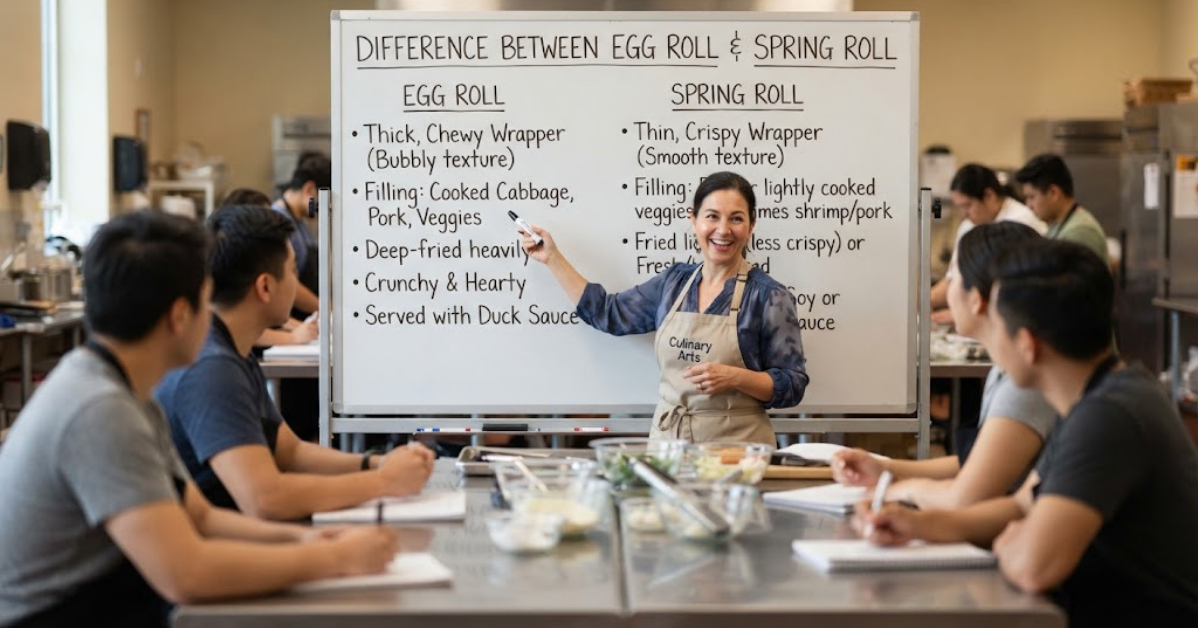
The easiest way to understand the egg roll vs spring roll distinction is to compare their usual characteristics.
| Feature | Egg Roll | Spring Roll |
|---|---|---|
| Wrapper | Usually thicker | Usually thinner |
| Texture | Thick, bubbly and crunchy when fried | Crisp and delicate when fried; soft when fresh |
| Typical filling | Cabbage, vegetables, meat | Vegetables, meat, seafood or other fillings |
| Cooking | Usually deep-fried | Fried or served fresh |
| Culinary tradition | Especially common in Chinese-American cuisine | Found across several Asian cuisines |
| Egg in wrapper | Usually no actual egg in many modern versions | Generally no egg |
| Appearance | Often thicker and larger | Usually thinner and more delicate |
These are general patterns, not absolute rules. Recipes vary considerably between countries, restaurants, and individual cooks.
What Is an Egg Roll?
In American Chinese cuisine, an egg roll is typically a fried roll made with a relatively thick wheat-flour wrapper.
The wrapper develops a distinctive blistered, crunchy exterior when deep-fried. Inside, you’ll often find shredded cabbage along with ingredients such as carrots, onions, pork, chicken, or shrimp.
Despite the name, modern egg rolls don’t necessarily contain egg in the wrapper.
That’s one reason the name can be confusing.
What Is Usually Inside an Egg Roll?
Common egg roll fillings include:
- Shredded cabbage
- Carrots
- Pork
- Chicken
- Shrimp
- Onions
- Bean sprouts
- Mushrooms
- Seasonings and sauces
The exact combination depends on the recipe.
Many American-style egg rolls are relatively heavily filled and have a substantial, crunchy shell. They’re commonly served as appetizers alongside dipping sauces.
What Is a Spring Roll?
The term spring roll covers a much broader range of foods.
In many Asian cuisines, spring rolls are made using thin wrappers and filled with vegetables, meat, seafood, or other ingredients. Some are fried until crisp, while others are served fresh without frying.
The name itself is historically connected to springtime and seasonal celebrations in China, where rolls were associated with eating fresh seasonal ingredients.
Because spring rolls exist in several culinary traditions, there isn’t one universal spring-roll recipe.
Common Types of Spring Rolls
Depending on the cuisine, you may encounter:
- Fried vegetable spring rolls
- Fresh Vietnamese-style rolls
- Chinese spring rolls
- Thai-style spring rolls
- Rolls containing seafood
- Vegetarian spring rolls
This regional variety is important when comparing spring rolls vs egg rolls.
What Is the Difference Between Egg Roll and Spring Roll Wrappers?
The wrapper is one of the clearest practical differences.
American-style egg rolls generally use a thicker wheat-based wrapper. When fried, this produces a rugged, crunchy exterior with noticeable bubbles and a substantial bite.
Spring rolls often use a much thinner wrapper. Depending on the recipe, it may be made from wheat flour, rice flour, or another starch-based mixture.
A thin wrapper cooks differently from a thick one. It tends to produce a lighter, more delicate texture.
Does an Egg Roll Wrapper Contain Egg?
Usually, the answer is not necessarily.
The name “egg roll” has led many people to assume that egg is an essential ingredient in the wrapper. However, many American-style egg roll wrappers don’t actually contain egg.
Recipes and commercial products can differ, so checking the ingredient list is the best way to know for sure.
Spring Roll vs Egg Roll: What’s Inside?
Another important egg roll and spring roll difference is the filling.
Egg rolls in American Chinese restaurants often feature a substantial amount of cabbage and other vegetables, sometimes combined with pork or another protein.
Spring rolls can have a wider range of fillings. Depending on the cuisine, they may contain:
- Fresh vegetables
- Cooked vegetables
- Herbs
- Pork
- Shrimp
- Chicken
- Tofu
- Rice noodles
- Seafood
Some fresh rolls use ingredients that would be unusual in a traditional fried egg roll.
Spring Rolls vs Egg Rolls: How Are They Cooked?
Cooking method can make an enormous difference in the final result.
Egg rolls
American-style egg rolls are generally deep-fried. The thicker wrapper becomes golden brown and crunchy while the filling heats inside.
Fried spring rolls
Some spring rolls are also deep-fried. Because their wrappers are thinner, however, they can have a lighter and more delicate crispness.
Fresh spring rolls
Some spring rolls aren’t fried at all.
Vietnamese fresh rolls, for example, are commonly wrapped in softened rice paper and served fresh. These rolls are often filled with vegetables, herbs, noodles, shrimp, or other ingredients.
This is why saying that every spring roll is fried would be inaccurate.
Egg Roll vs Spring Roll: Texture Differences
Texture is often the easiest way to tell the two apart.
A typical American egg roll has:
- A thick shell
- A pronounced crunch
- A slightly chewy interior layer
- A hearty filling
A fried spring roll tends to have:
- A thinner shell
- A lighter crunch
- A more delicate wrapper
- A less bulky appearance
A fresh spring roll is completely different again. Its wrapper is soft, flexible, and slightly chewy rather than crisp.
So if someone asks about cigars vs cigarettes—well, that’s another article. For spring rolls vs egg rolls, texture tells you a lot.
Why Are Egg Rolls Called Egg Rolls?
This is one of the more interesting questions surrounding the difference between egg roll and spring roll.
The exact history of the American egg roll is complicated, and there isn’t a single universally accepted explanation for the name.
One common assumption is that egg rolls must contain eggs. But the name doesn’t necessarily describe the ingredients in today’s versions.
Historical recipes and restaurant traditions have changed over time, and the American egg roll developed into something distinct from many traditional Chinese spring rolls.
In other words, the name isn’t a reliable ingredient list.
Are Egg Rolls Chinese or American?
The answer depends on what you mean by “egg roll.”
Egg rolls are strongly associated with Chinese-American cuisine, particularly the style commonly served in Chinese restaurants in the United States.
However, that doesn’t mean they represent one universal traditional Chinese food.
Chinese cuisine has many types of filled rolls, and terminology varies by region and historical period. The thick, deep-fried egg roll familiar to many Americans is best understood as part of the development of Chinese-American restaurant food.
Are Spring Rolls Chinese?
Spring rolls have deep roots in Chinese culinary history, but versions of spring rolls are now found across Asia.
Different countries have developed their own variations, ingredients, wrappers, sauces, and preparation methods.
For example, a spring roll in China may differ considerably from a fresh roll served in Vietnam or a fried roll served elsewhere in Southeast Asia.
That’s why the term spring roll should be viewed as a broad category rather than one standardized recipe.
Spring Roll vs Egg Roll: Which Is Healthier?
There isn’t a universal answer because preparation and ingredients matter more than the name alone.
A deep-fried egg roll is generally higher in calories and fat than a fresh, non-fried spring roll. But a fried spring roll can also absorb oil during cooking.
The filling matters, too.
For example, a vegetable-filled roll may have a different nutritional profile from one containing fatty meat or a sweetened sauce.
If you’re comparing the two from a nutrition perspective, consider:
- Whether the roll is fried.
- What type of wrapper is used.
- The amount of filling.
- The type of protein included.
- How much oil is absorbed during cooking.
- What dipping sauce is served with it.
A fresh spring roll can be a lighter choice, but you shouldn’t assume every spring roll is automatically healthier than every egg roll.
Egg Roll vs Spring Roll: Size and Appearance
You can often identify an egg roll just by looking at it.
American-style egg rolls are typically:
- Larger
- Thicker
- More cylindrical
- Heavily browned after frying
- Covered with a rough, bubbly crust
Spring rolls are often:
- Smaller or more delicate
- Thinner
- More tightly wrapped
- Smooth or lightly blistered
- Fresh-looking when made with rice paper
Of course, appearance alone isn’t foolproof. Restaurants can use different wrappers and preparation methods.
Can You Use Spring Roll Wrappers for Egg Rolls?
Technically, you can experiment with different wrappers, but the result won’t be exactly the same.
A thinner spring-roll wrapper will usually produce a more delicate exterior. It may also cook more quickly and become crisp in a different way.
An egg-roll wrapper is designed to create a thicker, more substantial shell.
If you’re making a recipe at home, use the wrapper specified by the recipe if you want the intended texture.
Can You Bake Egg Rolls or Spring Rolls?
Yes. Both can be prepared in an oven or air fryer rather than deep-fried, depending on the wrapper and recipe.
However, the texture will change.
Deep-frying typically produces the most pronounced crunch, while baking or air frying can create a crisp exterior with less oil.
For best results when using an oven or air fryer:
- Avoid overcrowding the cooking surface.
- Lightly coat the outside with oil if appropriate.
- Watch the rolls closely near the end of cooking.
- Follow the wrapper manufacturer’s instructions when available.
The cooking method can change the final result almost as much as the wrapper itself.
Egg Roll vs Spring Roll: A Simple Way to Remember
If you keep mixing up the two, remember this:
Egg roll = usually thicker, heavier and crunchier.
Spring roll = usually thinner, lighter and more varied.
That isn’t a rule for every recipe, but it’s a useful starting point.
The biggest distinction is that “egg roll” usually refers to a specific Chinese-American fried roll, while “spring roll” can describe several different types of rolls across Asian cuisines.
Common Misconceptions About Egg Rolls and Spring Rolls
Myth 1: Egg rolls always contain eggs
Not necessarily. Many modern egg roll wrappers don’t contain egg.
Myth 2: Spring rolls are always fried
Not true. Fresh spring rolls are commonly served without frying.
Myth 3: All spring rolls are the same
Definitely not. Spring rolls vary significantly between cuisines.
Myth 4: Egg rolls and spring rolls have identical wrappers
Usually not. Egg rolls generally use thicker wrappers, while many spring rolls use thinner ones.
Myth 5: One is always healthier
Not necessarily. Ingredients, portion size, preparation, and cooking method all matter.
Frequently Asked Questions
What’s the difference between spring rolls and egg rolls?
The main difference is usually the wrapper and preparation. American-style egg rolls tend to have thicker wrappers and are deep-fried, while spring rolls generally use thinner wrappers and may be fried or served fresh.
What is the difference between egg roll and spring roll?
An egg roll is typically a thicker, crispier fried roll associated with Chinese-American cuisine. A spring roll is a broader category that can involve thin wrappers, different fillings, and either fried or fresh preparation.
Are egg rolls healthier than spring rolls?
Not automatically. A deep-fried egg roll may contain more fat and calories than a fresh spring roll, but a fried spring roll can also be relatively high in calories. Preparation and ingredients matter.
Do egg rolls contain eggs?
Not necessarily. Despite the name, many commercially available egg roll wrappers don’t contain egg. Always check the ingredient list if you need to avoid eggs.
Are spring rolls always vegetarian?
No. Spring rolls can contain vegetables, meat, seafood, tofu, noodles, or other ingredients. The filling depends on the recipe and culinary tradition.
Are spring rolls fried?
Some are, but not all. Fried spring rolls are common, while fresh spring rolls are wrapped in softened wrappers and served without deep-frying.
Why are egg rolls called egg rolls?
The exact history of the name is not completely straightforward. The modern American egg roll does not necessarily contain egg, so the name should not be interpreted as a guarantee about ingredients.
Can I substitute spring roll wrappers for egg roll wrappers?
You can, but the finished roll will usually have a different texture. Spring-roll wrappers are generally thinner, so they produce a lighter, more delicate result.
Which tastes better, egg rolls or spring rolls?
That’s completely subjective. Egg rolls tend to appeal to people who enjoy a thick, crunchy exterior and hearty filling, while spring rolls offer more variety, including lighter fried versions and fresh rolls.
Conclusion: Egg Roll vs Spring Roll
The difference between egg roll and spring roll is more than simply what’s inside the wrapper. In general, an American-style egg roll has a thicker wrapper, a substantial filling, and a crunchy deep-fried exterior. Spring rolls usually use thinner wrappers and can be either fried or served fresh.
The important thing to remember is that spring roll is a broad term used for several different foods across Asian cuisines, while egg roll usually refers to a particular Chinese-American style.
So when you’re deciding between spring roll vs egg roll, don’t judge them by the name alone. Look at the wrapper, filling, cooking method, and culinary tradition. Once you know those details, the difference becomes much easier to spot—and you’ll know exactly what you’re ordering.