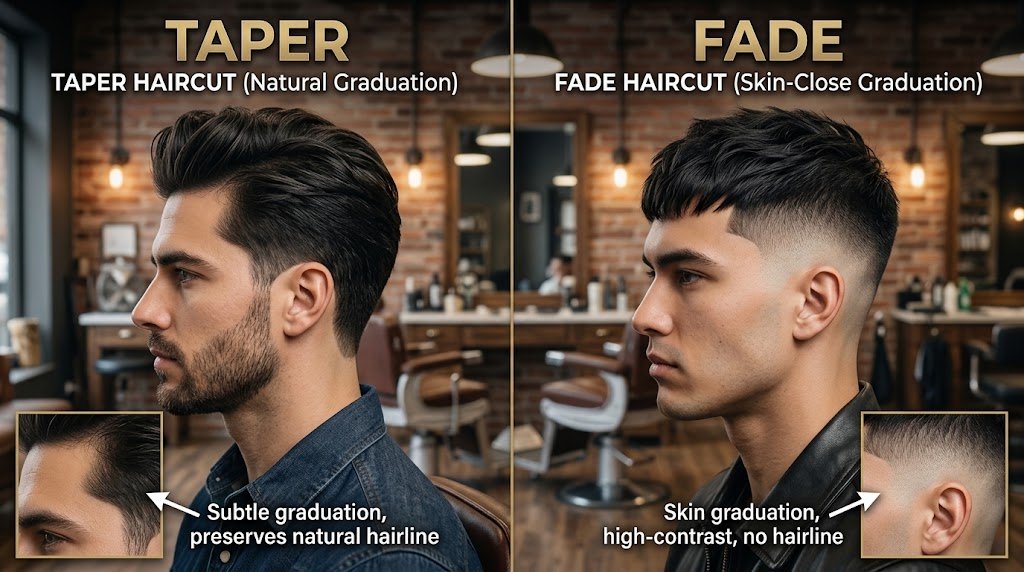
Ever sat in a barber’s chair and wondered whether you should ask for a taper or a fade? You’re not alone. The two haircuts can look surprisingly similar, especially in photos, but there are some important differences.
The difference between taper and fade mainly comes down to where the hair is shortened and how high the gradual transition extends. A taper usually keeps more hair around the sides and back, while a fade creates a much stronger transition that can go higher up the head.
Knowing that distinction makes it much easier to explain what you want to your barber.
What Is a Taper Haircut?
A taper is a classic haircut where the hair gradually becomes shorter around specific areas, usually the sideburns, neckline, and sometimes around the ears.
The transition is subtle. Your barber keeps a reasonable amount of length on most of the sides and back, creating a neat but natural appearance.
A traditional taper does not usually expose much scalp. That makes it a good option if you want a polished haircut without an extremely short finish.
Common Taper Styles
There are several variations of the taper haircut, including:
- Classic taper: A clean, conservative style with gradual shortening around the edges.
- Low taper: The transition begins close to the ears and neckline.
- Taper fade: A taper combined with a more noticeable fade effect.
- Temple taper: Focuses mainly around the temples and sideburns.
- Neck taper: Concentrates on creating a clean transition around the neckline.
Tapers also work well with many hairstyles on top, including textured crops, quiffs, side parts, curls, and longer hairstyles.
What Is a Fade Haircut?
A fade is more dramatic than a traditional taper. The hair gradually changes from very short or nearly skin-level at the bottom to longer hair higher on the head.
Depending on the style, the fade can extend quite high on the sides and back.
A fade is often designed to make the transition itself a noticeable part of the haircut. The result can look sharp, modern, and defined.
Popular Types of Fades
Low fade: The fade starts close to the ears and lower back of the head. It offers a relatively subtle look.
Mid fade: The transition begins around the middle of the sides. It provides a stronger contrast than a low fade.
High fade: The short section extends much higher toward the temples and upper sides. This creates a bold appearance.
Skin fade: The hair is taken down extremely short, sometimes all the way to the skin at the lowest point.
Drop fade: The fade curves downward toward the back of the head rather than following a straight horizontal line.
Difference Between Taper and Fade
So, what is the actual difference between taper and fade?
The easiest way to understand it is to look at the amount of hair removed and the location of the transition.
| Feature | Taper | Fade |
| Transition | Usually subtle | More noticeable |
| Shortest area | Edges and neckline | Can extend across sides and back |
| Scalp visibility | Usually minimal | Can be visible |
| Overall appearance | Classic and natural | Sharp and modern |
| Maintenance | Generally easier | Often requires more frequent touch-ups |
| Styling options | Very versatile | Very versatile |
A taper mainly cleans up the edges, while a fade changes the appearance of a much larger section of the sides and back.
Taper vs Fade: Which One Looks More Natural?
If you prefer a haircut that does not look overly sharp or dramatic, a taper may be the better choice.
Because more length remains around the sides and back, the transition tends to blend naturally with the rest of the hair.
A fade, on the other hand, produces greater contrast. That does not mean it looks unnatural. It simply has a more defined barbered appearance.
Your personal style matters here. Someone who prefers a classic office-friendly haircut may like a taper, while someone who enjoys modern streetwear-inspired styles may prefer a fade.
Which Haircut Is Easier to Maintain?
Both haircuts require maintenance, but a taper can usually grow out more subtly.
As the hair gets longer, the gradual transition remains relatively easy to manage. You may not need to visit the barber as frequently.
Fades can lose their crisp appearance faster. Once the very short section starts growing, the contrast becomes less defined.
For a consistently sharp fade, many people schedule a barber visit every few weeks. The exact timing depends on how quickly your hair grows and how precise you want the haircut to remain.
Which Is Better for Different Face Shapes?
There is no universal haircut that works perfectly for everyone. Your face shape, hair texture, hairline, and preferred length all play a role.
Round Face
A higher fade can add the appearance of height and create more definition around the sides.
A taper can also work well if you want something less dramatic.
Oval Face
An oval face generally gives you plenty of flexibility. Both tapers and fades can work, depending on the hairstyle you choose on top.
Square Face
A clean taper can complement a strong jawline without taking attention away from the natural structure of the face.
A low or mid fade can also look excellent if you want a sharper finish.
Long Face
Be careful with very high fades if you already have a longer face. Keeping some fullness around the sides can create a more balanced appearance.
A low taper may be a better option.
What About Curly or Wavy Hair?
Tapers and fades can both work beautifully with curly and wavy hair.
A taper can preserve more of your natural volume while keeping the hairline and sideburns tidy.
A fade creates more contrast between the textured hair on top and the shorter sides. This can make curls appear even more prominent.
For tightly curled or coiled hair, a skilled barber can also use a fade or taper to create a clean shape while preserving the texture on top.
Taper or Fade: Which Should You Ask Your Barber For?
If you are unsure, think about the look you want rather than simply choosing a haircut name.
Ask yourself:
- Do I want a subtle or bold haircut?
- How short do I want the sides?
- Do I want my scalp to be visible?
- How often am I willing to visit the barber?
- How much length do I want to keep around my ears and neckline?
You can also show your barber a reference photo. This is often the easiest way to avoid confusion because different barbers and clients may use terms like “taper” and “fade” slightly differently.
Can a Taper and Fade Be Combined?
Yes. In fact, you may hear the term taper fade used quite often.
A taper fade combines elements of both styles. The barber creates a gradual transition while keeping the effect focused around particular areas.
For example, you might request a low taper fade with longer hair on top. This gives you a clean finish around the edges without removing too much hair from the sides.
The exact result depends on the barber’s technique and the clipper lengths used.
How to Explain the Haircut You Want
Instead of saying only “give me a fade,” be specific.
You could say:
- “I want a low fade with some length left on the sides.”
- “Give me a low taper around the ears and neckline.”
- “I want a mid fade but don’t take it too high.”
- “Keep the top long and blend the sides gradually.”
- “I want a skin fade at the bottom.”
If you’re unsure about clipper numbers, let your barber guide you based on your hair type and desired finish.
Frequently Asked Questions
Is a taper better than a fade?
Neither is automatically better. A taper is usually more subtle and conservative, while a fade creates a stronger contrast. The better option depends on your preferred appearance, hair type, and maintenance routine.
Is a taper the same as a fade?
No. They are related but not identical. A taper generally focuses on gradually shortening the hair around the edges, while a fade usually creates a more extensive transition on the sides and back.
Does a fade show more scalp than a taper?
Usually, yes. Many fades begin with very short hair, including skin fades. A traditional taper normally leaves more hair around the sides and back, so less scalp is visible.
How long does a taper haircut last?
A taper can remain presentable for several weeks, although the exact time depends on hair growth and the level of neatness you prefer. A fresh trim can restore the sharpness around the edges.
Is a taper good for professional settings?
Yes. A classic or low taper can provide a clean, professional appearance without looking overly aggressive. It can be paired with side parts, textured styles, short crops, and longer hair on top.
Which is more popular, taper or fade?
Both are widely requested hairstyles. Fades are especially popular for modern, high-contrast looks, while tapers remain a popular choice for people who want a cleaner and more understated haircut.
Final Thoughts
Understanding the difference between taper and fade comes down to one simple idea: a taper usually keeps more hair and focuses the transition around the edges, while a fade generally takes the shortening farther up the sides and back.
Neither style is automatically the right choice. Think about your face shape, hair texture, lifestyle, and how often you want to visit the barber. Most importantly, tell your barber exactly how short you want the sides and show a reference photo if possible.
Once you know what each style does, choosing your next haircut becomes a lot easier.